







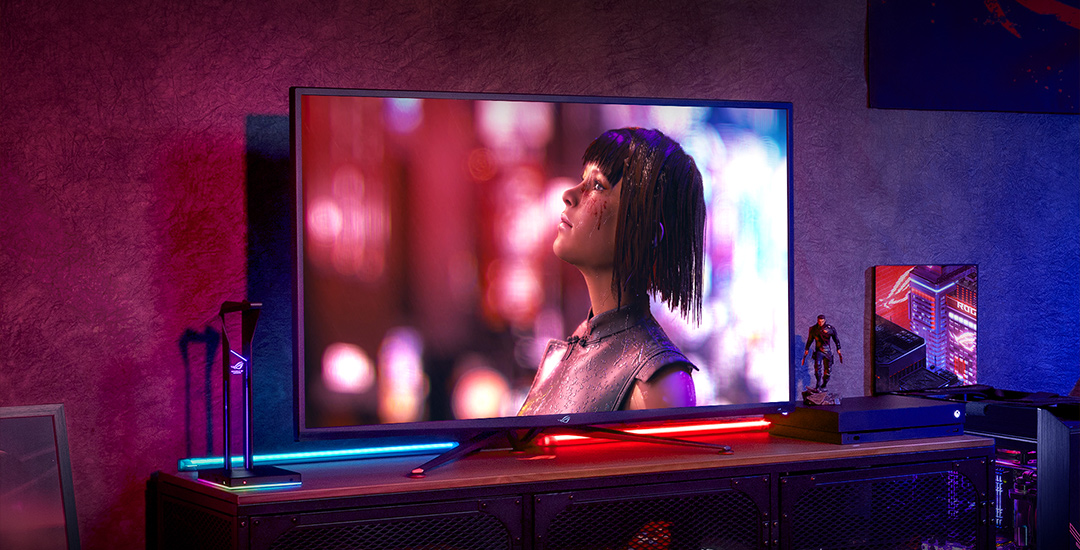
World's First 43" DSC Gaming Monitor
Brilliant Color. Blistering Speed.
ROG Swift PG43UQ is the world's first 43-inch gaming monitor with display stream compression (DSC) technology that delivers smooth, 4K visuals at up to 144Hz. It features high dynamic range (HDR) technology with 90% DCI-P3 professional color gamut coverage and exceptional contrast for DisplayHDR™ 1000 certification, plus support for NVIDIA® G-SYNC®technology. ROG Swift PG43UQ also includes GameFast Input technology for more responsive, lag-free control that heightens the gameplay experience and gives you an edge against your opponents.

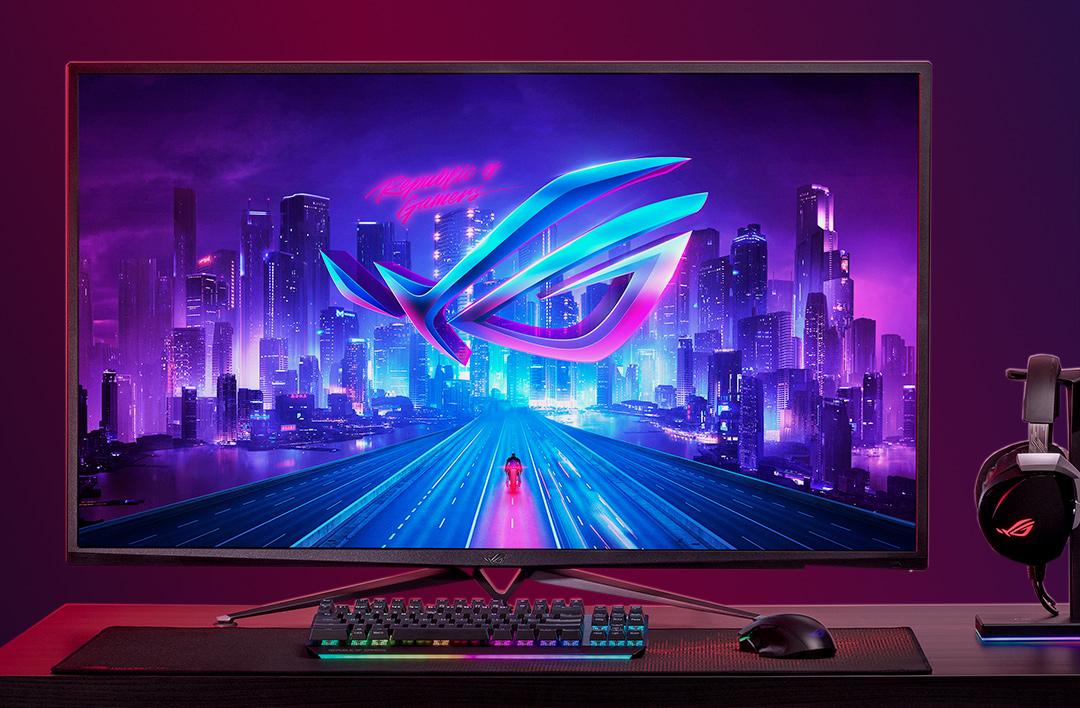
Superb picture quality
With DSC Technology
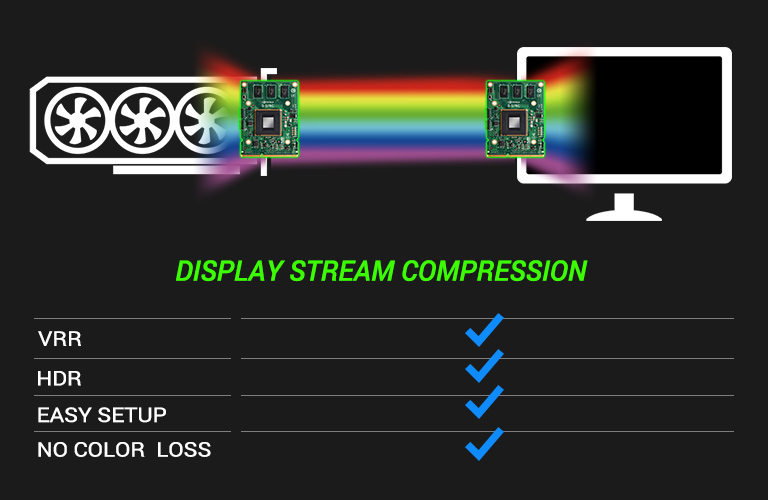
ROG Swift PG43UQ’s Display stream compression (DSC) technology* enables 4K visuals via a single DisplayPort 1.4 connection by compressing and decompressing each frame on the fly with no visual loss of image quality.
Learn more about DSC
*To enable 4K resolution at 144 Hz with DSC, an NVIDIA®GeForce® RTX 20 series, AMD Radeon™ RX 5700 or higher graphics card is required. For additional information about enabling DSC, contact your graphics card manufacturer.

Display Stream Compression (DSC) technology
Display Stream Compression technology is an industry-wide compression standard for
transporting ultra-high definition video streams across a single interface at high speed
with no perceptible loss of visual quality. With DSC technology, the ROG monitor can
display incredibly detailed and smooth visuals at native 4K resolution with a 144 Hz
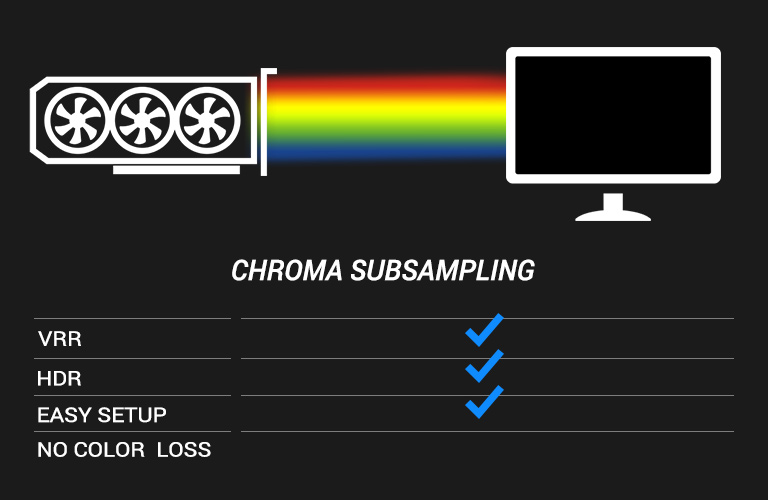
refresh rate via a single DisplayPort 1.4 connection without chroma subsampling, which
can negatively affect visual fidelity.
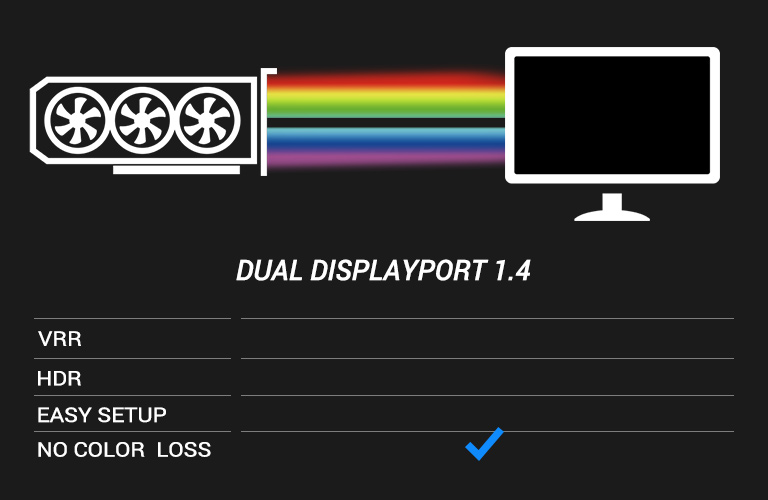
Previously, to achieve this level of performance gaming monitors needed two DisplayPort
connections to transfer the video signal from the PC, which also often required complex
driver configuration and prevented display of high-dynamic-range (HDR) content and
variable refresh rates while gaming. The ROG monitor eliminates these issues, supporting
both HDR and variable refresh rates via a single DisplayPort 1.4 connection.
Comparison of methods used to achieve 4K visuals at 144 Hz:

BIG-SCREEN GAMING AND ENTERTAINMENT
Loaded with gaming features, the 43-inch ROG Swift PG43UQ offers a more immersive big-screen experience without sacrificing the high refresh rate and variable refresh tech usually only found in smaller panels.
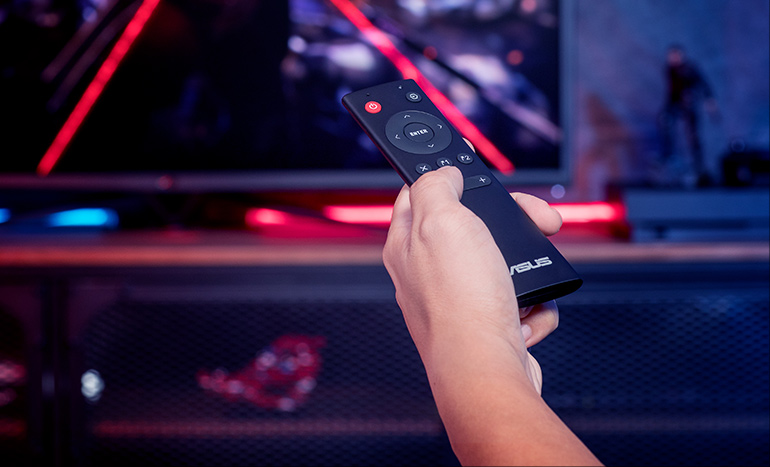
Remote Control
lets you adjust display settings from a distance.
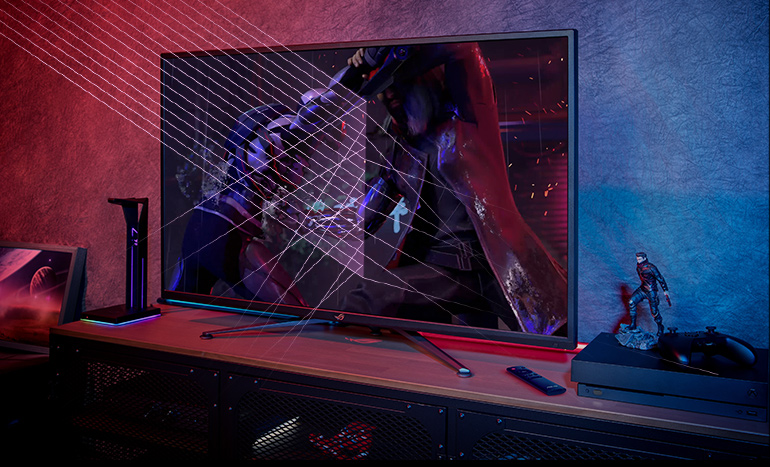
ANTI-GLARE SCREEN
makes it easier to see on-screen content in changing indoor lighting conditions.
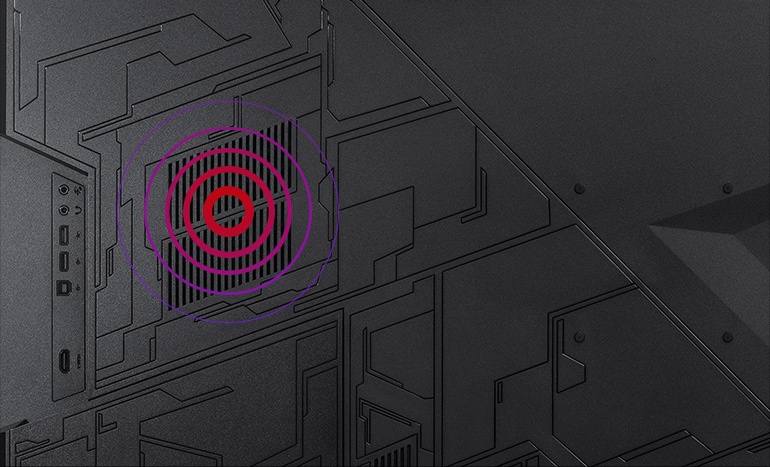
TWO 10W STEREO SPEAKERS
deliver incredible audio fidelity with ASUS SonicMaster technology.

GameFast Input Technology
ROG Swift PG43UQ features GameFast Input Technology to minimize input lag. This technology provides much faster motion delivery so you'll always be up to speed with in-game action at the precise timing you need to respond as quickly as is needed.

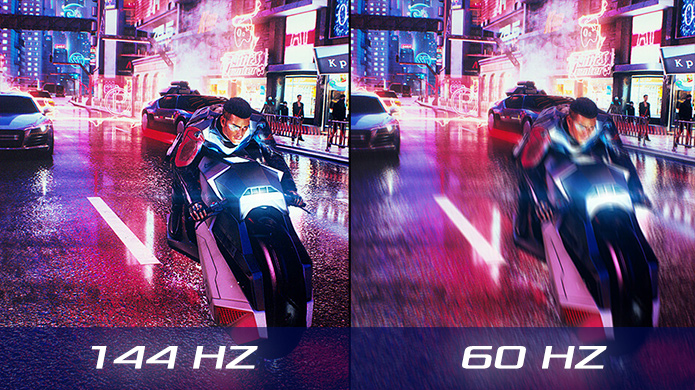
Fast 144Hz Refresh Rate and 1ms Response Time (MPRT)
ROG Strix PG43UQ offers an ultrafast 144Hz refresh rate and 1ms response time (MPRT), ensuring that even the fastest-paced games played at the highest visual settings remain buttery-smooth and completely lag-free.
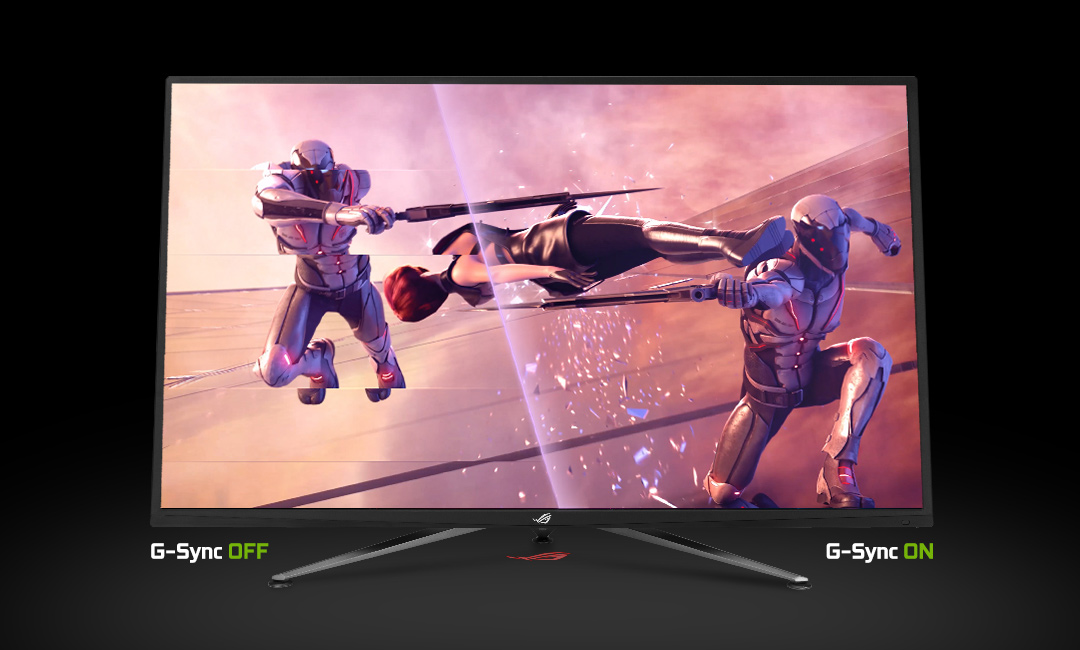
NVIDIA G-SYNC COMPATIBLE
Certified as G-SYNC compatible, ROG Swift PG43UQ delivers a seamless, tear-free gaming experience by enabling VRR by default on NVIDIA GeForce GTX 10-Series and NVIDIA GeForce RTX 20-Series graphics cards.
Wide Color Range and High Contrast
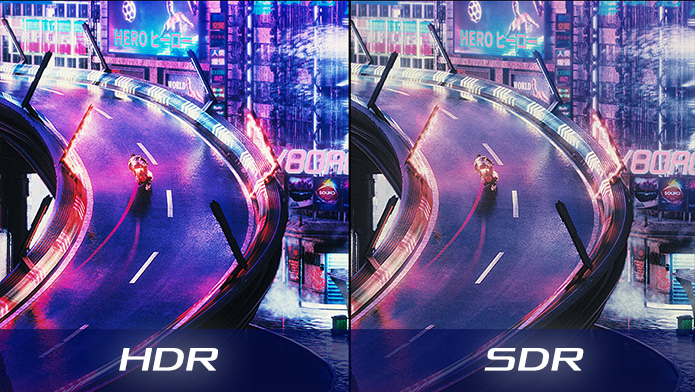
HIGH DYNAMIC RANGE (HDR)
WITH DCI-P3 90% AND DISPLAYHDR™ 1000
ROG Swift PG43UQ supports HDR technology across a range of luminance (up to 400cd/m2). The brightest whites and the darkest blacks bring out details like never before. ROG Swift PG43UQ also delivers DCI-P3 90% color gamut and contrast performance that passes DisplayHDR™ 1000 certification. To ensure color Accuracy, each ROG Swift PG43UQ is factory pre-calibrated and comes with a factory calibration report.

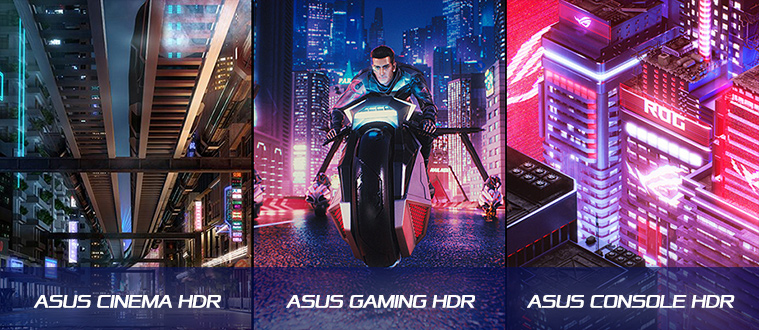
Multiple HDR Modes
Now you can choose from multiple HDR modes in order to adjust monitor HDR performance based on the current scenario.
In-game enhancements
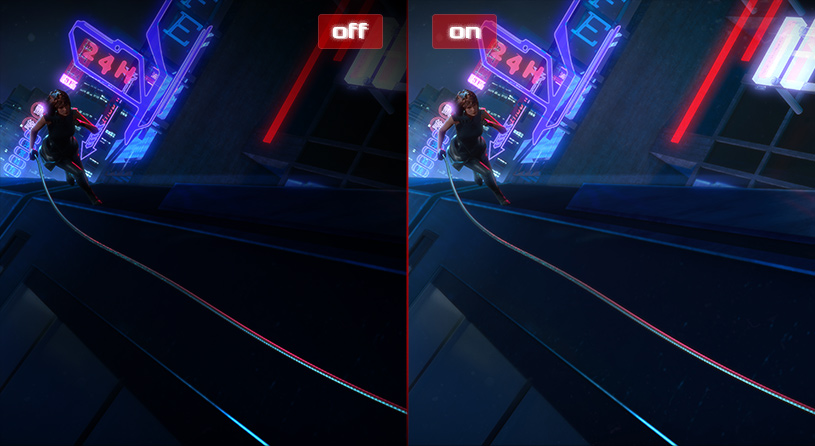
Shadow Boost Technology
Shadow Boost technology clarifies dark areas of the game world without overexposing brighter areas — improving overall viewing while also making it easier to spot enemies hidden in dark areas of the map.
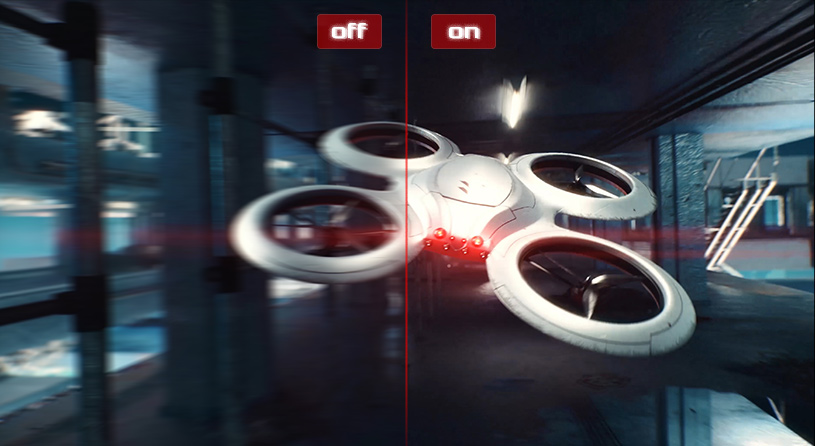
ASUS-EXCLUSIVE EXTREME LOW
MOTION BLUR TECHNOLOGY
ASUS Extreme Low Motion Blur technology achieves 1ms MPRT to eliminate smearing and motion blur, and makes objects in motion look sharper, so gameplay is more fluid and responsive.
GameVisual
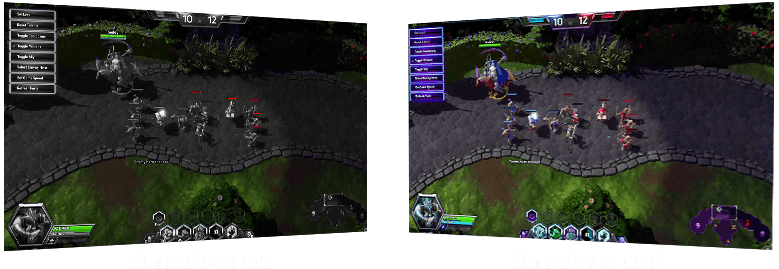
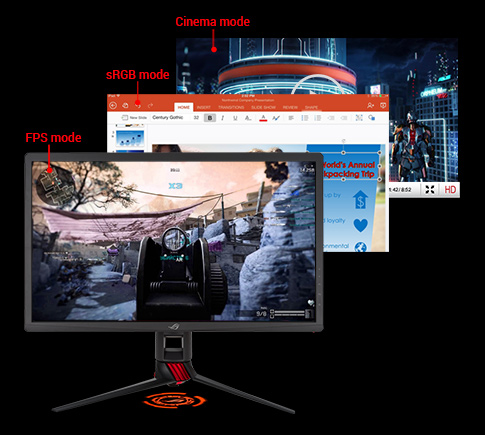
ASUS GameVisual gives you seven preset display modes and one user mode tailored to suit different types of content.
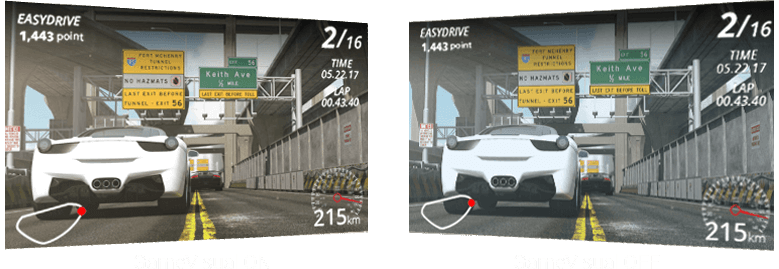





Reduces input lag, making it ideal for racing games when G-SYNC technology is on.
Enhances the color of opponent health/mana bars so you know when to strike.
Cools and saturates colors for more immersive movies.
Enhances color saturation and contrast sharpness to give you better, brighter colors and detailed visuals for real-time strategy (RTS) or RPG games.
High contrast settings enhance the visibility even in dark scenes to clearly see your enemies.
Perfect for surfing the web or editing photos.
Provide more contrast gradations makes grass greener and skies bluer so it's ideal for slide shows.
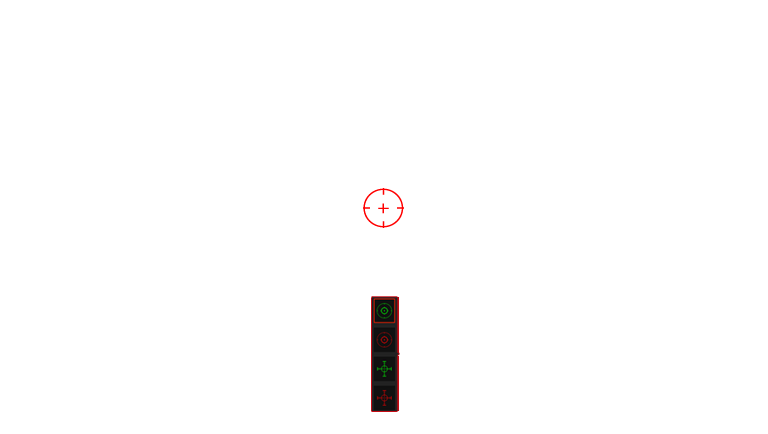
GamePlus HOTKEYS
The ASUS-exclusive, integrated GamePlus hotkey offers in-game enhancements that help you get more out of your game.This function is co-developed with input from pro gamers, allowing them to practice and improve their gaming skills.





EFFORTLESS Tweak Tool
ASUS DISPLAY WIDGET SOFTWARE
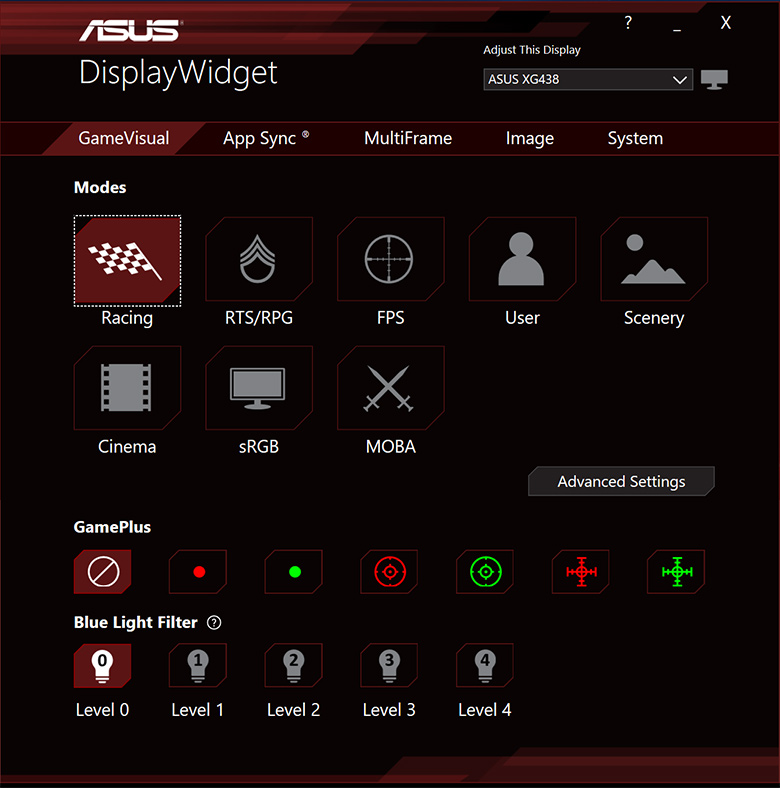
DisplayWidget is an intuitive software utility that lets users tweak the settings of the monitor. Adjustments to these utilities can be made via the On Screen Display (OSD) menu or the navigational joystick, but ASUS DisplayWidget makes accessing and using these various settings much faster and easier.
App Sync™
App Sync™ lets you assign specific ASUS GameVisual modes to individual applications and game titles to make sure the program you are using is in your preferred mode. You also have the option of changing these assigned settings quickly.
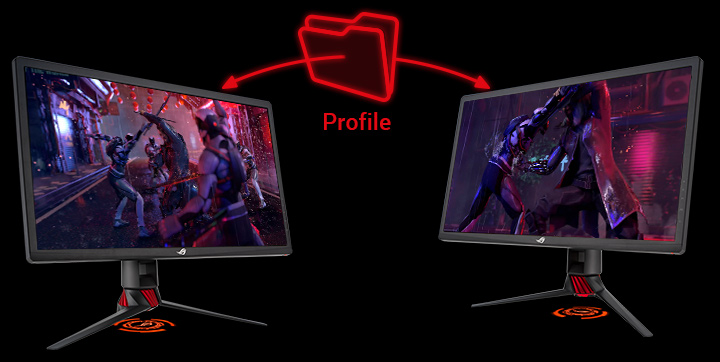
Sharable Display Setting Parameter
All customized GameVisual settings can be saved to an AXML file format that can be shared with other same monitor users.
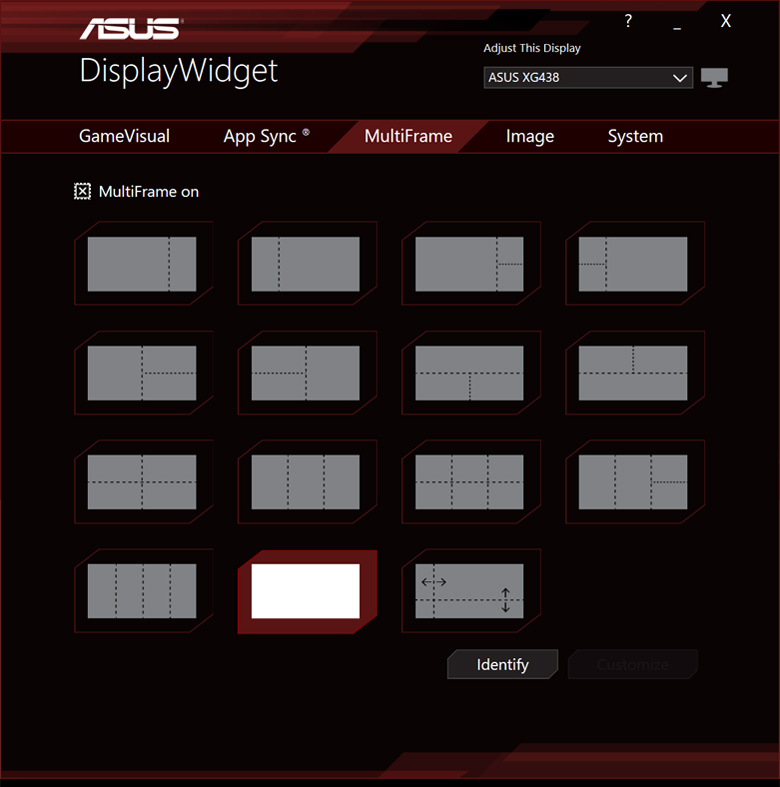
MultiFrame
MultiFrame allows users to organize multiple windows on desktop and to arrange them in an orderly way so that they don't overlap on a big screen.
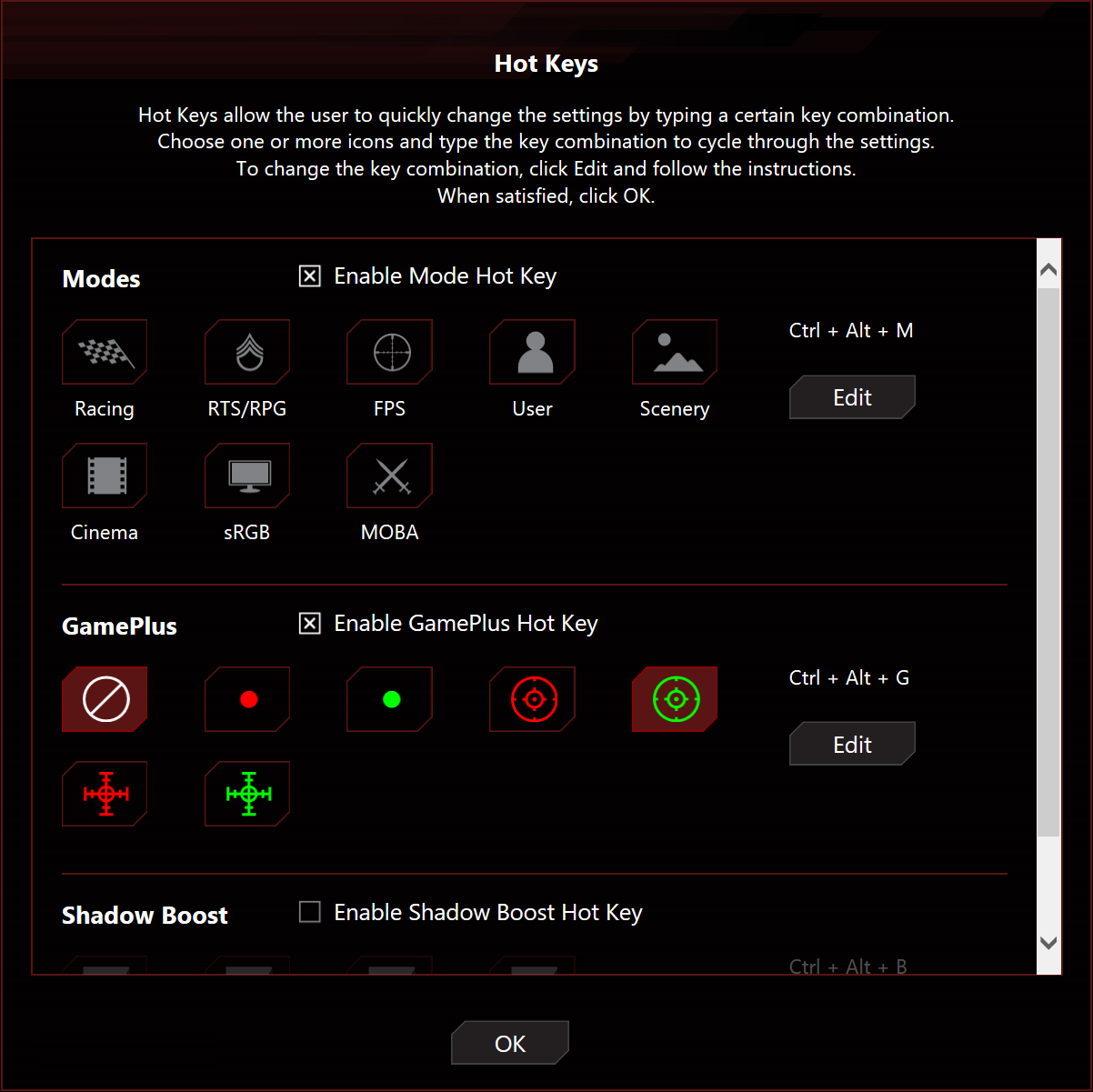
Keyboard Hot Keys
Hot Keys allow users to quickly change the settings by typing a certain key combination.
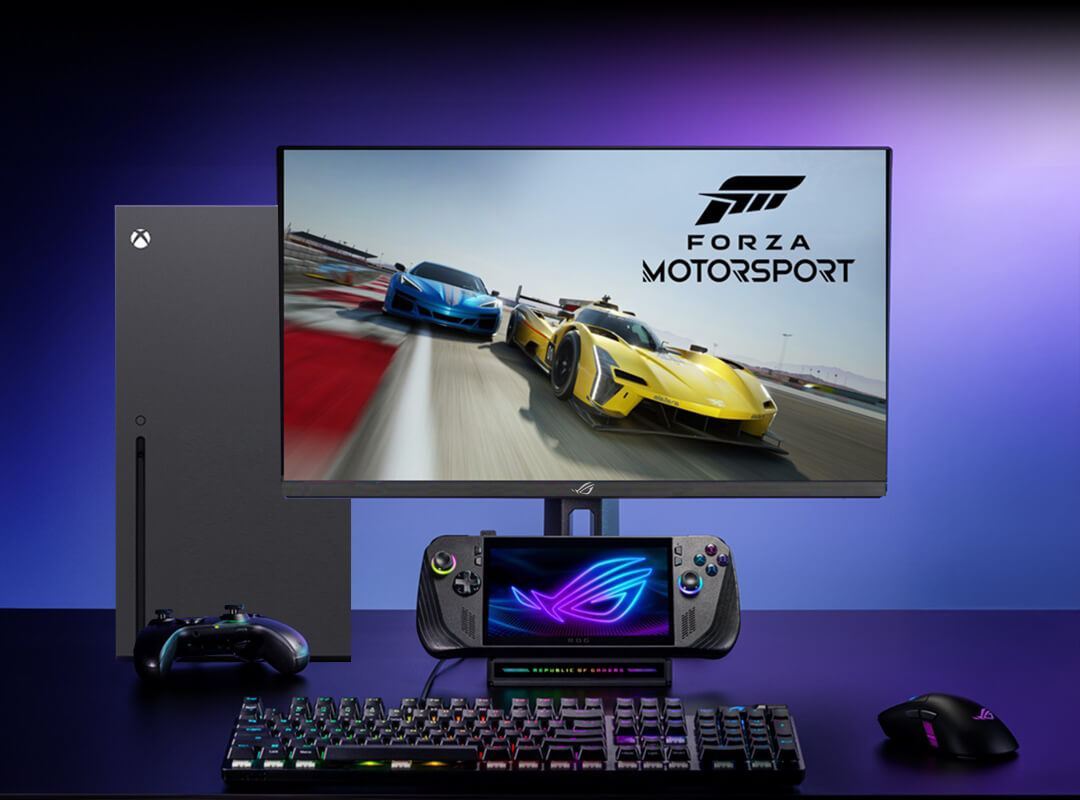
Enhance Gaming with 4K on Consoles and the ROG Ally X Handheld*
Enjoy truly immersive 4K** gaming with sharper imagery and clearer text on PlayStation 5, Xbox Series X, Nintendo Switch 2 and ROG Ally X. In addition, Auto Low Latency Mode kicks in automatically for ultra-responsive control the moment gameplay starts.
- HDMI 2.1 VRR 4K@120Hz: Ultra-smooth visuals on PS5 and Xbox Series X
- USB-C: Seamless video and power delivery to ROG Ally X handheld
- Auto Low Latency Mode: Instant control and unparalleled responsiveness
Disclaimer:
*Support ROG Xbox Ally X(2025) and ROG Ally X(2024).
**Frame rates are capped at 60fps for 4K output when connected to Nintendo Switch 2.
***Image for reference only.

Eye-Care Solutions
Ultra-Low Blue Light technology
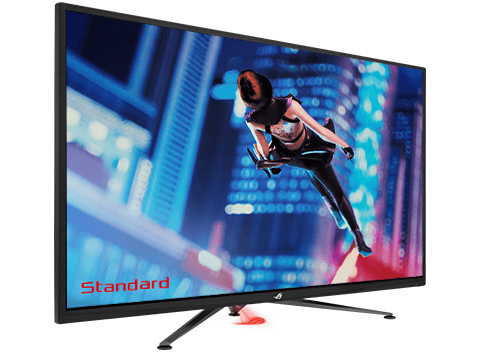
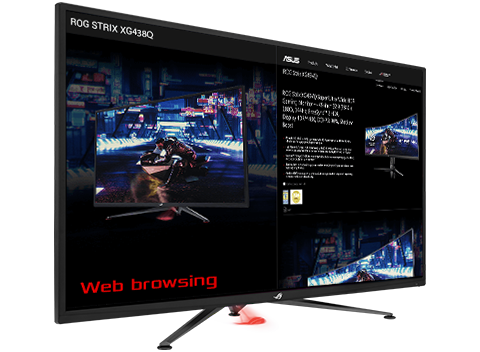
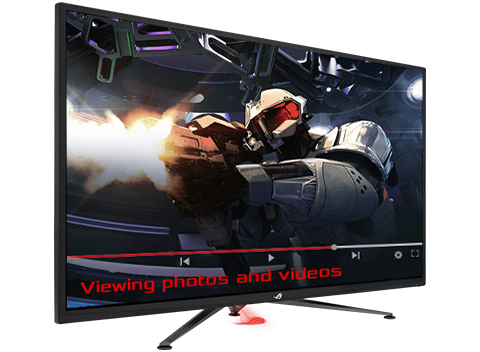
ROG Strix PG43UQ comes with TÜV Rheinland-certified ASUS Ultra-low Blue Light filters to protect eyes and prevent strain from harmful blue light. Select from four different filter settings via the OSD menu or by using the five-way joystick.
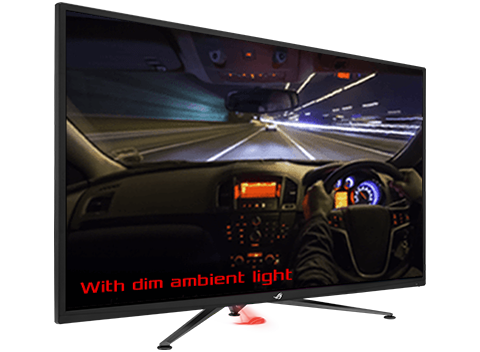
Low Blue Light Level







Flicker-Free Technology
ROG Swift PG43UQ reduces onscreen flicker to give you a more comfortable gaming experience. This minimizes eye strain during marathon gaming sessions.



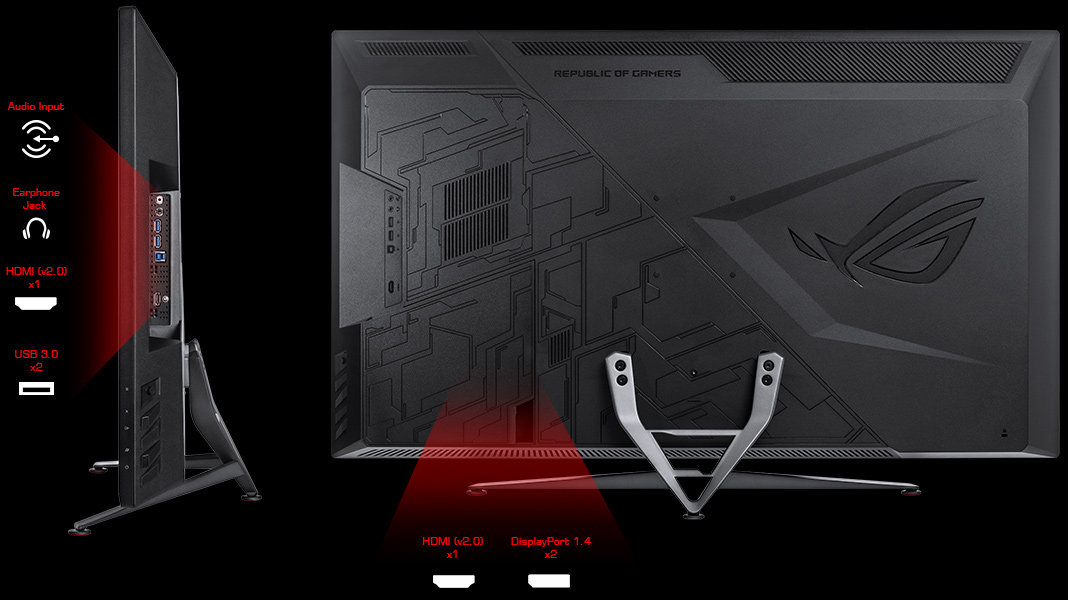
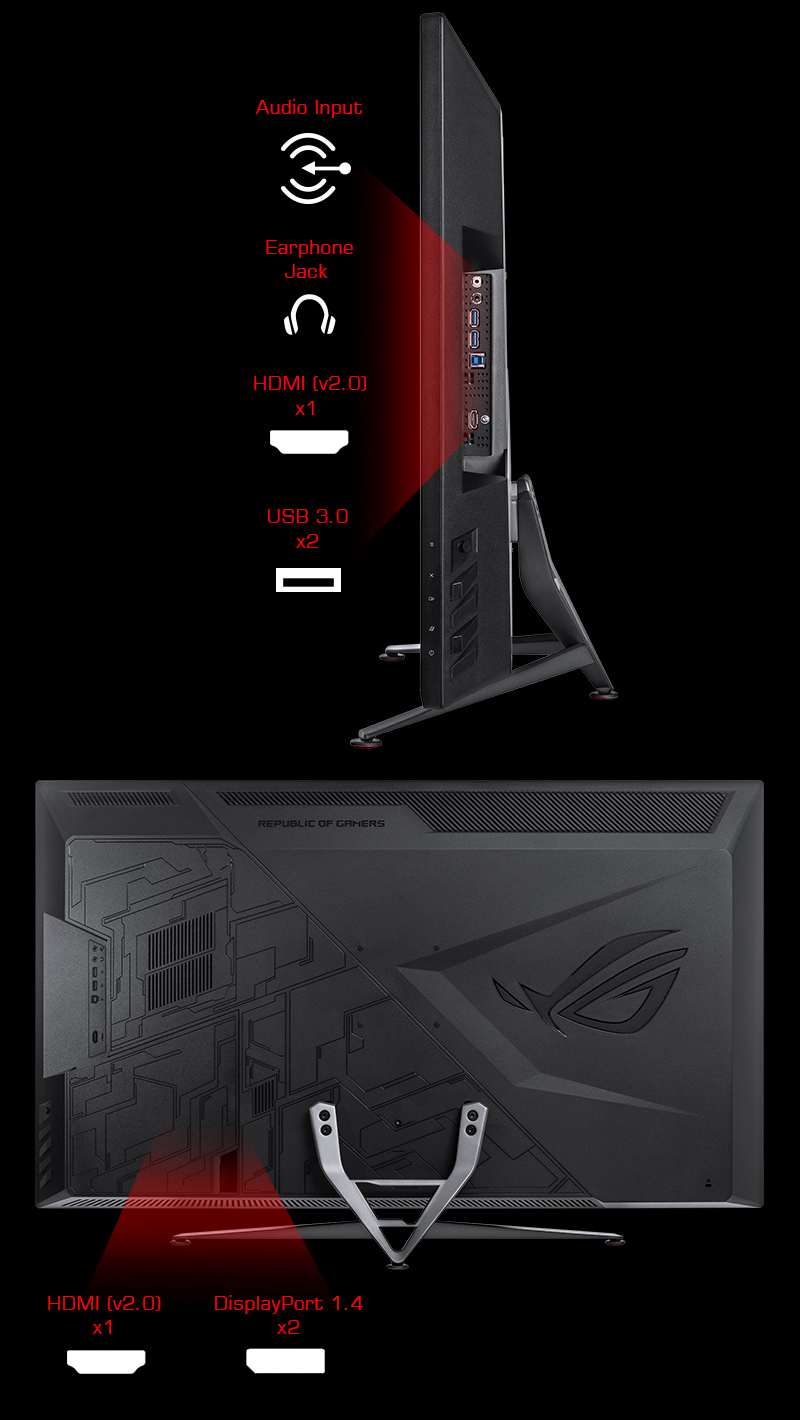
Robust Connectivity
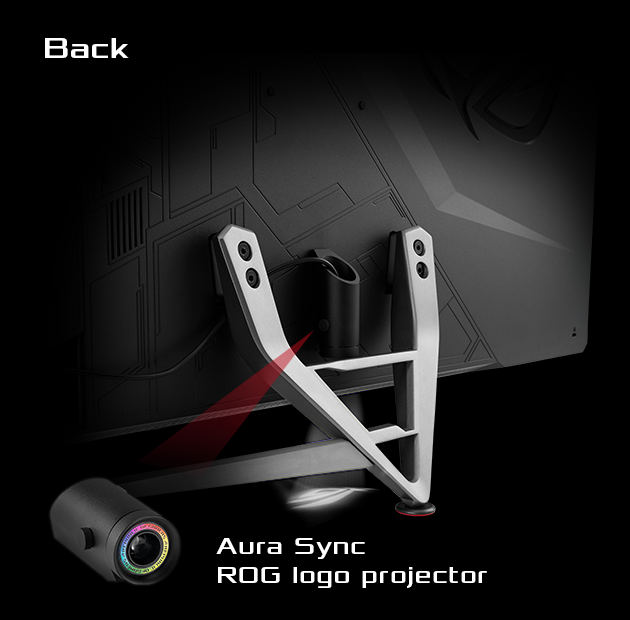
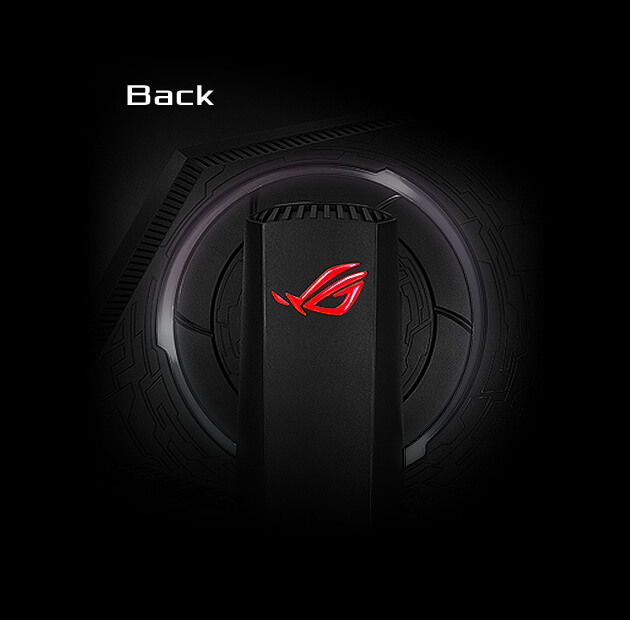
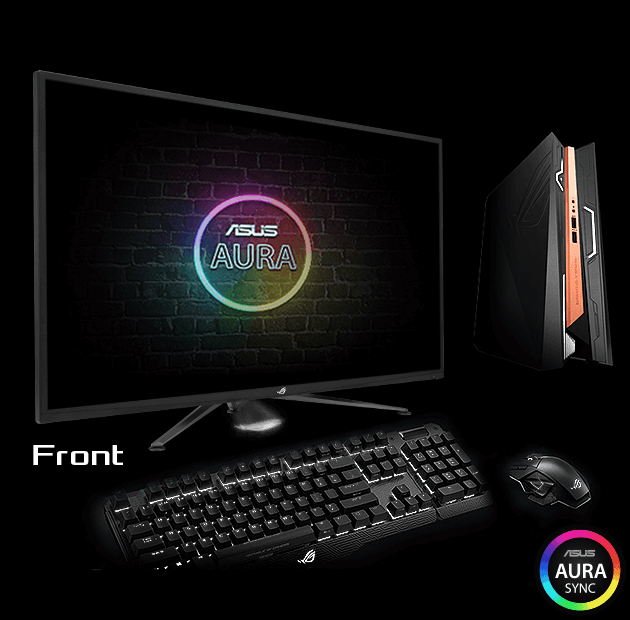
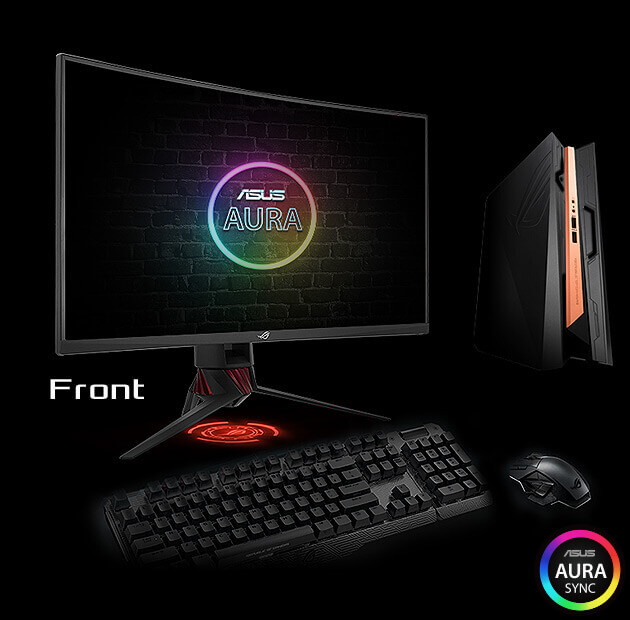
ASUS AURA SYNC LIGHTING
With exclusive ASUS Aura Sync lighting technology*, ROG Swift PG43UQ provides ambient
lighting that can be synchronized with other Aura-enabled components and
peripherals.
*Download the latest Aura Sync software here.
FAQ
-
The choice depends on your primary game genre.
- For Competitive Players (FPS): Refresh Rate is the priority. High refresh rate monitors provide fast and smooth visuals for increased responsiveness and motion clariy. That all adds up to a measurable advantage in games like Valorant or Counter-Strike 2.
- For Immersion Players (AAA): Resolution is key. 4K (3840 x 2160) is now the baseline for cinematic experiences, offering extreme detail for titles like Cyberpunk 2077 or the latest Unreal Engine 5 releases.
- The "Sweet Spot": 1440p at 240Hz remains the most balanced configuration for most gamers, offering sharp visuals without requiring an ultra-high-end GPU.
-
Each panel serves a specific use case based on environment and performance needs:
- OLED: OLED gaming monitors offer infinite contrast for perfect blacks and a near-instantaneous 0.03ms response time, giving you a premium visual experience in any type of game.
- IPS: Most of today’s budget-friendly gaming monitors use IPS panels, but their advantages go far beyond affordability. IPS panels are known for exceptional color consistency and viewing angles, and they’re available with very high refresh rates.
- Mini-LED: Mini-LED gaming monitors provide extreme peak brightness (1000+ nits) and localized dimming for vibrant highlights, making them a compelling pick for gamers chasing premium HDR experiences.
-
They represent different ways a screen handles light and color:
- OLED: In an OLED panel, every pixel is its own light source. This allows for "True Black" because pixels can turn completely off. This panel type is the gold standard for speed and contrast.
- IPS: An IPS panel uses liquid crystals aligned in rows to produce consistent color. This panel type is trusted for excellent color accuracy and wide viewing angles. These characteristics make it perfect if you’re sharing the screen or doing creative work alongside gaming.
- VA: VA panels use crystals aligned vertically to block light more effectively. This allows VA panels to offer better native contrast than IPS types thanks to deeper blacks. However, these panels aren’t always preferred for fast-paced gaming due to a “dark smearing” effect.
-
The "best" size is determined by your viewing distance, resolution, and the type of games you play. The most competitive esports gamers tend to prefer smaller 24-inch or 25-inch monitors that allow them to keep the entire screen in the center of their field of vision. This makes sure that they don’t miss a thing on the minimap or in the periphery of their vision.
Larger 32-inch monitors provide a cinematic experience that pairs well for lavish AAA spectacles, role-playing games, and immersive sims. They’re perfect for 4K and dual-mode setups where you want a large canvas for cinematic immersion. Ultrawide and super-ultrawide monitors extend horizontally to fill more of the periphery of your vision. They’re often preferred by racing sim enthusiasts, but also cater to multitaskers and gamers who prioritize immersion.
The “sweet spot” for most gamers is a 27-inch monitor size. Big enough to feel immersive yet compact enough to keep all the action in the center of your field of view, 27-inch monitors offer a great experience in any game. Many gamers find that 1440p 27-inch monitors offer a compelling balance of detail and pixel density. Since most mainstream graphics cards can produce very high FPS at this resolution, it’s a great fit for most gamers’ setups, too.
-
Absolutely—if the hardware supports it. HDR (High Dynamic Range) expands the range between the brightest whites and darkest blacks, allowing for looming shadows and dazzling highlights that make every frame feel more true to life.
- DisplayHDR 400: This is the entry point for the ratings system, and it indicates that a monitor provides a welcome boost in brightness, contrast, and color performance over comparable standard monitors.
- DisplayHDR 600/1000: A monitor with one of these ratings delivers what many would call the "Real HDR" experience, requiring local dimming zones for high-contrast impact.
- DisplayHDR True Black (400/500/600): This group of ratings is exclusive to OLED panels, giving gamers an easy tool for comparing the performance of different OLED gaming monitors. These ratings better account for the incredible depth of black levels on OLED panels rather than focusing on raw brightness.
-
ELMB (Extreme Low Motion Blur) is ASUS’s proprietary strobing technology that eliminates motion blur for "CRT-like" clarity. ELMB works at a fixed refresh rate (e.g., exactly 144Hz), and is best used with game settings that allow for a very stable FPS. ELMB Sync is the evolution of the technology. It allows ELMB strobing to work simultaneously with Variable Refresh Rate technologies like G-SYNC and FreeSync. This gives you the best of both worlds by eliminating screen tearing and minimizing motion blur, even as your frame rate fluctuates naturally over time.
-
"Overdrive" is a technique exclusive to LCD gaming monitors that pushes pixels to change colors faster to reduce motion blur. However, a fixed overdrive setting that looks great at 240 FPS might cause "overshoot" (disturbing halos around moving objects) if your frame rate drops to 60 FPS.
Variable Overdrive is an advanced form of the technique that intelligently adjusts the overdrive level in real-time, ensuring that you get reduced blur without distracting visual artifacts, even as your frame rate fluctuates. Found in many ROG and TUF Gaming monitors from ASUS, Variable Overdrive gives you clear images with zero ghosting or overshoot.
-
Yes. Both PS5 and Xbox Series X/S support VRR via HDMI 2.1. This eliminates screen tearing and stuttering, making games feel smoother even if the frame rate isn't perfectly stable. All ASUS and ROG HDMI 2.1 monitors are fully compatible.
-
Dual-Mode is a revolutionary feature that allows a single monitor to switch between two distinct performance profiles—typically a high-resolution mode and a high-refresh-rate mode. It achieves this by combining four pixels into one (pixel binning) to prioritize speed, or using every individual pixel to prioritize detail.
- The Benefit for Gamers: You get the best of both worlds. You can enjoy a cinematic, immersive experience in AAA titles (like Black Myth: Wukong or Cyberpunk 2077) and then instantly switch to a "pro-speed" mode for Competitive FPS (like Valorant or Apex Legends).
This is a massive cost and space saver. Instead of buying two different monitors, one ROG Dual-Mode monitor handles every genre perfectly.
-
ROG OLED displays are factory-calibrated to achieve a high level of color accuracy. Color accuracy is typically measured by an average delta E value, with value less than two indicating that the human generally cannot distinguish the difference between the color on the screen and the reference color. Creative professionals are the most demanding users when it comes to color accuracy, but accurate monitors also give gamers the ability to experience games just as their developers intended.
-
For the highest possible performance in 2026, the specific version and bandwidth matter.
- DisplayPort 2.1 is the current performance king. Look specifically for DP2.1a with UHBR20 support, which provides a massive 80Gbps bandwidth. This is the best fit for today’s high-end graphics cards, which support DisplayPort 2.1 output.
- HDMI 2.1 ports are preferred for console gaming (PS5/Xbox) and for high-end gaming on a TV, but the connector type is capped at 48Gbps. For this reason, gamers tend to use DisplayPort 2.1a for PC gaming and HDMI 2.1 for consoles or secondary media devices.
-
As with many choices with your gaming monitor, this depends on your environment and usage. For most gamers today, we tend to recommend a budget OLED gaming monitor since even an affordable OLED offers cutting-edge visuals with premium motion clarity, true-to-life-colors, and the panel type’s signature inky blacks. If you’re looking to buy one monitor that you’ll love for years, OLED is the clear winner in most scenarios.
That said, the older IPS technology still has a place on the desks of many gamers. If your monitor will see hours of use for productivity or coding tasks in a room with a high ambient light level, you might prefer an extra-bright IPS monitor, perhaps a model with a mini-LED backlight. IPS monitors are also available for very attainable prices, making them a common choice for budget PC gaming setups.